Pakistan Envoy Raises Kashmir at Independence Day Event in Delhi, Citing UN Resolutions: What It Means for India-Pakistan Relations
By: Javid Amin | 14 Aug 2026
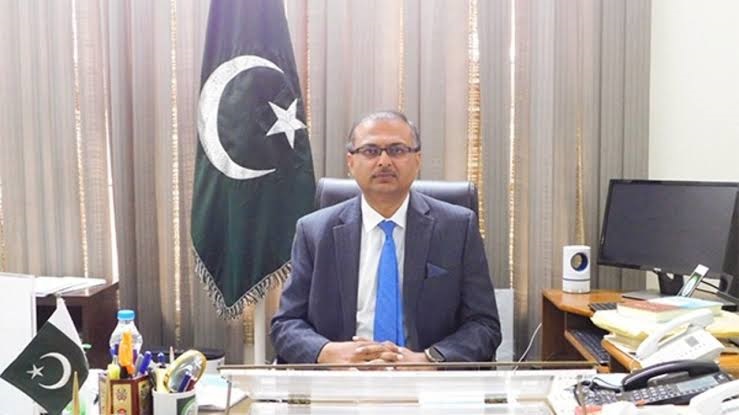
Pakistan has once again put Kashmir at the centre of its diplomatic messaging toward India, with its Chargé d’Affaires in New Delhi invoking United Nations resolutions and the aspirations of Kashmiris during Pakistan’s Independence Day celebrations.
The remarks by Saad Ahmad Warraich on August 14 were not simply another restatement of Islamabad’s long-standing position. They came at a particularly sensitive moment for India-Pakistan relations, following the military confrontation of 2025, continuing diplomatic tensions and a renewed debate over the relevance of the 1972 Simla Agreement.
Warraich said the path to lasting and durable peace in South Asia lay in resolving the Kashmir dispute in accordance with UN resolutions and the aspirations of the Kashmiri people.
The statement immediately brings an old diplomatic fault line back into focus: Pakistan continues to invoke the UN framework and the right of self-determination, while India maintains that Jammu and Kashmir is an integral part of India and that outstanding issues with Pakistan must be addressed bilaterally.
But there is an important legal and historical nuance behind both positions.
Pakistan Envoy Uses Independence Day Platform to Reopen Kashmir Debate
Pakistan’s 80th Independence Day celebrations in New Delhi provided an unusually symbolic setting for Warraich’s remarks.
According to reports, the Pakistani diplomat argued that a durable peace in South Asia could not be achieved without resolving the Kashmir dispute in accordance with UN Security Council resolutions and the wishes of the Kashmiri people.
The message fits closely with Islamabad’s established diplomatic position.
Pakistan has for decades presented Kashmir as an unresolved international dispute rather than an exclusively bilateral territorial question. Its official narrative emphasises the UN Security Council resolutions of the late 1940s and early 1950s, particularly those associated with a proposed plebiscite.
Pakistan’s National Assembly continues to describe Kashmir as an issue of self-determination and explicitly invokes the UN resolutions in support of its position.
The significance of the Delhi statement, therefore, lies less in the fact that Pakistan mentioned Kashmir and more in where, when and how it was raised.
An Independence Day reception attended by diplomats and officials is a formal diplomatic platform. Using it to highlight Kashmir ensures that the issue becomes part of the public diplomatic record rather than remaining confined to domestic political speeches in Pakistan.
What Exactly Do the UN Resolutions Say About Kashmir?
This is where the debate becomes considerably more complicated than competing political claims suggest.
The most frequently cited resolution is UN Security Council Resolution 47, adopted on April 21, 1948.
The UN’s official record identifies it as a resolution concerning the restoration of peace and order and the holding of a plebiscite in Jammu and Kashmir.
Resolution 47 did envisage conditions for determining the future of Jammu and Kashmir through a free and impartial plebiscite.
However, the resolution did not simply order an immediate vote.
It laid out a sequence involving restoration of peace, demilitarisation and cooperation between India and Pakistan before the proposed plebiscite could take place. The resolution called for Pakistan to facilitate the withdrawal of tribesmen and Pakistani nationals who had entered Jammu and Kashmir for fighting, followed by steps involving Indian and state forces and the creation of conditions for a plebiscite.
That sequence is central to understanding the dispute.
The Plebiscite Was Part of a Conditional Process
The UN framework was therefore not a standalone instruction saying that Kashmiris should immediately vote on accession.
It was embedded in a broader process involving:
- Restoration of peace.
- Withdrawal of forces and irregular combatants.
- Creation of conditions for a free and impartial vote.
- Cooperation between India, Pakistan and the UN mechanism.
Subsequent UN documents continued to deal with questions surrounding demilitarisation and the disposition of forces.
This is why both sides can point to elements of the UN record while reaching radically different conclusions about what those resolutions mean today.
India’s Position: Pakistan Cannot Cite UN Resolutions Selectively
New Delhi’s response to Pakistan’s argument has remained fundamentally different.
India points to the accession of Jammu and Kashmir to India in 1947 and argues that the territory is an integral part of the country.
India also emphasises Pakistan’s presence in territory that New Delhi regards as being under Pakistani occupation.
In a recent statement at the UN Human Rights Council, India’s Permanent Mission in Geneva accused Pakistan of selectively invoking UN Security Council resolutions while ignoring what India describes as Pakistan’s obligation to vacate territory under its occupation. India reiterated that Jammu and Kashmir is an integral part of India.
This is a crucial element of New Delhi’s diplomatic counterargument.
India’s position is essentially that Pakistan cannot invoke only the portions of the historical UN framework that support its political narrative while disregarding the conditions attached to those resolutions.
The Simla Agreement Adds Another Layer
The Kashmir debate cannot be understood today without examining the Simla Agreement of 1972.
Signed by then Prime Minister Indira Gandhi and Pakistan President Zulfikar Ali Bhutto after the 1971 war, the agreement established a bilateral framework for India-Pakistan relations.
The text says that the two countries agreed to resolve differences through bilateral negotiations or other peaceful means mutually agreed upon by both sides. It also committed the parties to respecting the Line of Control in Jammu and Kashmir without unilaterally altering it.
This became the foundation of India’s longstanding argument against third-party intervention.
Why Simla Matters in the Kashmir Debate
India’s position is that the Simla Agreement superseded the earlier diplomatic circumstances in which the UN resolutions were adopted and established a later bilateral mechanism for resolving outstanding issues.
Pakistan disputes that interpretation.
Islamabad argues that the Simla Agreement did not erase the Kashmir dispute or cancel the earlier UN framework. Pakistan’s own parliamentary material explicitly maintains that the agreement did not change what it describes as the disputed status of Jammu and Kashmir.
This disagreement is one of the fundamental reasons the two countries continue to talk past each other.
India emphasises bilateralism. Pakistan emphasises the UN framework and Kashmiri self-determination.
Both positions draw upon different parts of the historical record.
A New Complication: Pakistan Has Questioned Simla’s Relevance
The diplomatic landscape became even more complicated in 2026.
Pakistan’s Defence Minister Khawaja Asif said in June that the Simla Agreement was effectively no longer valid, arguing that bilateral mechanisms had collapsed following the deterioration in India-Pakistan relations. He said Pakistan had returned to what he described as the 1948 framework.
That position is significant because Islamabad’s latest invocation of UN resolutions comes after a Pakistani minister publicly questioned the continuing validity of the bilateral framework that India relies upon to reject internationalisation.
From New Delhi’s perspective, this creates a contradiction:
Pakistan cannot simultaneously dismiss the bilateral framework when it is politically inconvenient and expect India to accept an older multilateral framework on Pakistan’s preferred terms.
From Islamabad’s perspective, however, the argument is different: the Simla Agreement did not settle Kashmir, and therefore the underlying dispute remains unresolved.
This legal and diplomatic contest is likely to continue.
Why Pakistan Keeps Raising Kashmir Internationally
Pakistan’s Kashmir strategy has several objectives.
1. Keeping the Issue Internationally Visible
The first objective is straightforward: prevent Kashmir from disappearing from international diplomatic discussion.
If India succeeds in framing Kashmir entirely as an internal matter, Pakistan’s diplomatic room narrows considerably.
By repeatedly referring to UN resolutions, Islamabad keeps the dispute connected to the United Nations’ historical record.
2. Reinforcing Pakistan’s Domestic Narrative
Kashmir also remains deeply embedded in Pakistan’s national political identity.
For successive Pakistani governments and political parties, the issue represents not simply foreign policy but a matter of national solidarity.
The National Assembly’s current public material continues to place self-determination at the centre of Pakistan’s Kashmir narrative.
An Independence Day event therefore provides an opportunity to connect Pakistan’s own national story with its Kashmir policy.
3. Keeping Pressure on New Delhi
Pakistan also uses international forums to challenge India’s position on the post-2019 constitutional and political changes in Jammu and Kashmir.
This approach is designed to keep diplomatic pressure alive even when formal India-Pakistan dialogue is limited.
Why India Rejects the “Internationalisation” of Kashmir
For New Delhi, internationalisation is strategically unacceptable.
India’s preferred framework is direct engagement with Pakistan, without outside mediation.
The logic is rooted partly in the Simla Agreement, which commits the two countries to bilateral negotiations or another peaceful mechanism mutually agreed upon by them.
India has also repeatedly rejected the characterisation of Jammu and Kashmir as an international dispute requiring third-party mediation.
Its position is reinforced by its constitutional and political changes concerning Jammu and Kashmir and by its assertion that Pakistan must first address cross-border terrorism and vacate territory under its control.
An Indian statement at the UN recently made precisely this point, accusing Pakistan of invoking UN resolutions while ignoring its own obligations under those resolutions and the Simla Agreement.
The Kashmir Issue After the 2025 India-Pakistan Conflict
The timing of the latest Pakistani statement is particularly important.
India and Pakistan experienced a serious military confrontation in May 2025 following the Pahalgam terror attack and India’s subsequent military action against targets in Pakistan and Pakistan-administered territory.
A ceasefire eventually stopped the immediate military escalation, but it did not restore normal diplomatic relations.
Recent assessments describe bilateral ties as remaining deeply strained, with diplomacy largely frozen and periodic disputes continuing over Kashmir, water and other issues.
That means the traditional diplomatic tools for managing the Kashmir dispute are weaker than they were during earlier periods of tension.
The absence of sustained political dialogue makes public diplomatic statements more important — but also more dangerous.
Kashmir Is No Longer Only About the LoC
Another major change is the widening scope of the dispute.
Kashmir today encompasses several interconnected questions:
- The Line of Control.
- India-Pakistan territorial claims.
- Terrorism and cross-border militancy.
- Human rights.
- Constitutional changes in Jammu and Kashmir.
- Pakistan-administered Kashmir.
- China-controlled areas claimed by India.
- Water resources.
- Military deployments.
- Nuclear deterrence.
- Regional geopolitics involving China and the United States.
That makes the Kashmir issue significantly more complex than the original 1947-48 dispute.
The China Factor Cannot Be Ignored
The Kashmir dispute also has a third major territorial dimension involving China.
India claims territory in Ladakh that is under Chinese control, while Pakistan controls territory on the western side of the former princely state.
India’s Ministry of External Affairs has stated that the entire Union Territories of Jammu and Kashmir and Ladakh are integral parts of India and has also rejected the 1963 Pakistan-China boundary agreement concerning the Shaksgam Valley.
This means the territorial question surrounding the former princely state is not simply a two-country dispute.
There are effectively three major state actors involved in the territorial geography:
India, Pakistan and China.
That geopolitical reality makes any simplistic solution increasingly difficult.
Why the Independence Day Timing Matters
Pakistan’s Independence Day falls on August 14, one day before India’s Independence Day.
That proximity has historically created a highly symbolic diplomatic calendar.
Pakistan has frequently used August 14 to express solidarity with Kashmiris, while August 15 provides India an opportunity to emphasise sovereignty, territorial integrity and national unity.
The diplomatic messaging therefore acquires an additional layer.
When Pakistan’s representative in New Delhi raises Kashmir on August 14, the statement is not merely directed at India.
It is also aimed at:
- Pakistani domestic audiences;
- Kashmiris on both sides of the Line of Control;
- international diplomats;
- Muslim-majority countries;
- the wider international media;
- and governments that may influence future India-Pakistan diplomacy.
The Human Dimension Often Gets Lost in the Diplomatic Contest
There is another aspect that deserves attention.
The Kashmir dispute is frequently discussed through the language of sovereignty, UN resolutions, terrorism and bilateral agreements.
But behind these arguments are millions of people living on both sides of the Line of Control.
For ordinary Kashmiris, decades of conflict have meant displacement, militancy, military confrontation, political uncertainty, restrictions, economic disruption and repeated cycles of violence.
At the same time, civilians across Jammu and Kashmir, including those affected by terrorism and cross-border firing, have experienced profound insecurity.
A serious discussion of Kashmir therefore needs to avoid reducing its people to instruments in the competing narratives of New Delhi and Islamabad.
Is Pakistan Really “Internationalising” Kashmir?
Yes — but with an important qualification.
Pakistan’s strategy is clearly designed to keep Kashmir before international audiences and to invoke the UN framework as evidence that the issue has an international diplomatic history.
But saying that Pakistan can simply take the matter to the UN and obtain a new international intervention would be misleading.
The political environment has changed dramatically since 1948.
The Simla Agreement created a bilateral framework.
India rejects third-party mediation.
The UN resolutions themselves contain conditions and were adopted in a very different geopolitical and military context.
And the Security Council’s political composition and priorities have changed repeatedly over the decades.
So Pakistan can continue raising Kashmir internationally.
That does not mean the international community is automatically prepared to resolve it on Pakistan’s terms.
The UN Resolutions Remain Part of the Historical Record — But Their Interpretation Is Contested
This distinction is essential for responsible reporting.
It is factually correct that UN Security Council resolutions concerning Jammu and Kashmir exist and that Resolution 47 referred to a plebiscite under specified conditions.
It is also factually correct that India rejects Pakistan’s interpretation of those resolutions and argues that Pakistan has not fulfilled the conditions required by the UN framework.
It is equally important that the Simla Agreement subsequently established a bilateral mechanism for resolving India-Pakistan disputes.
Therefore, the statement “the UN ordered India to hold a plebiscite immediately” is an oversimplification.
Likewise, the statement “the UN has no historical role whatsoever in Kashmir” would also be inaccurate.
The actual record is considerably more complicated.
What Does This Mean for India-Pakistan Relations?
The immediate impact of Warraich’s statement is unlikely to be a diplomatic breakthrough.
Instead, it reinforces the existing divide.
Pakistan’s likely objective
Islamabad wants to:
- Keep Kashmir internationally visible.
- Preserve the UN dimension of the dispute.
- Present itself as supporting Kashmiri self-determination.
- Challenge India’s claim that Kashmir is solely an internal issue.
- Keep diplomatic pressure on New Delhi.
India’s likely response
New Delhi is likely to:
- Reject Pakistan’s characterisation of Jammu and Kashmir.
- Reiterate its territorial-integrity position.
- Emphasise the Simla Agreement.
- Raise cross-border terrorism.
- Point to Pakistan-administered Kashmir.
- Reject third-party mediation.
This is essentially the same diplomatic contest that has continued for decades — but under significantly more difficult political and security conditions.
The Bigger Question: Can Kashmir Return to Dialogue?
That is the real strategic issue.
Public statements can keep the dispute alive.
UN references can strengthen diplomatic narratives.
Political speeches can satisfy domestic audiences.
But none of these mechanisms can produce a durable settlement by themselves.
Any meaningful progress would ultimately require India and Pakistan to reopen a sustained political channel capable of addressing:
- Security concerns;
- Terrorism;
- Cross-border violence;
- The Line of Control;
- Humanitarian issues;
- Trade and connectivity;
- Water concerns;
- The political aspirations of people in the region;
- And the competing territorial claims.
That remains an extremely difficult proposition in the present environment.
Bottom Line
Pakistan’s Chargé d’Affaires Saad Ahmad Warraich’s Kashmir remarks in New Delhi on August 14 were a carefully timed reaffirmation of Islamabad’s traditional diplomatic position. He invoked UN resolutions and the aspirations of Kashmiris while presenting resolution of the dispute as essential to lasting peace in South Asia.
But the diplomatic argument surrounding those resolutions is far more complicated than either side’s political messaging suggests.
The UN did address Kashmir. Resolution 47 did envisage a plebiscite. But that proposal was embedded in a sequence of conditions involving peace, withdrawal and demilitarisation.
India subsequently entered the Simla Agreement, committing both sides to resolve differences through bilateral negotiations or another mutually agreed peaceful mechanism and to respect the Line of Control.
Pakistan continues to argue that Simla did not extinguish the Kashmir dispute or eliminate the UN framework. India argues that Pakistan cannot selectively invoke UN resolutions while disregarding their conditions and its bilateral commitments.
The result is a diplomatic stalemate in which the same historical documents are interpreted through two fundamentally different political lenses.
And that is precisely why the Kashmir issue remains one of the world’s most enduring and difficult international disputes.